Crypto Mining Explained: What Is Crypto Mining?
Learn what crypto mining is, how it works, and why it's essential for securing networks like Bitcoin and other cryptocurrencies.
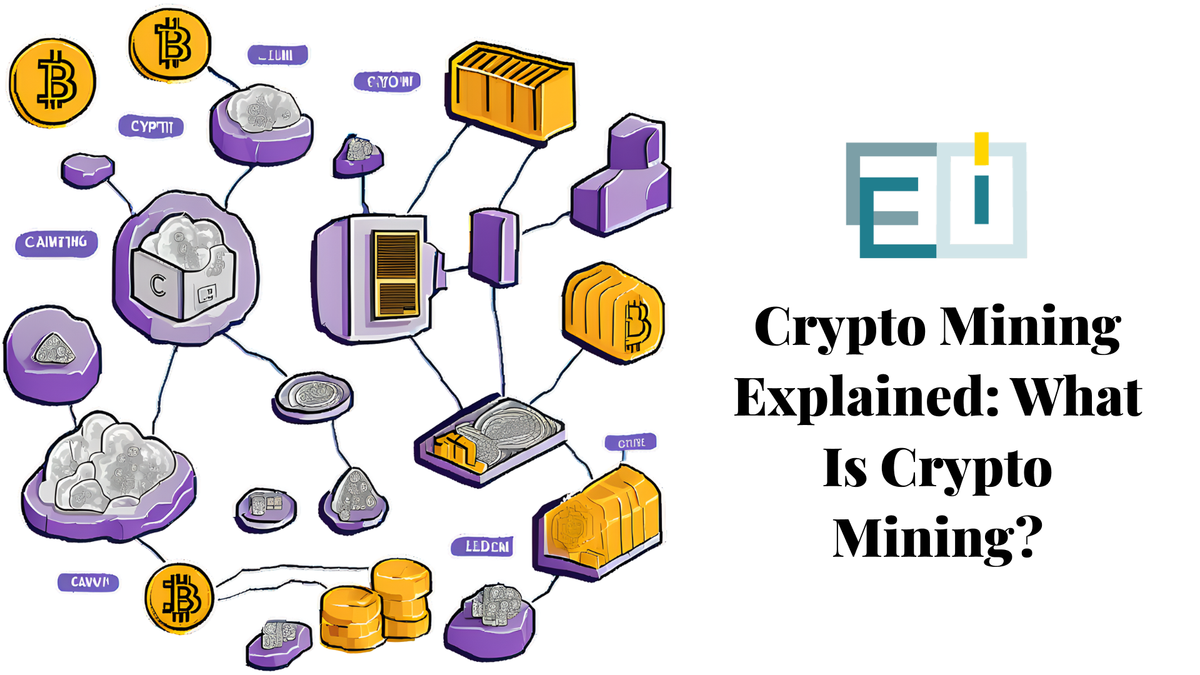
Crypto mining is a process that validates transactions on blockchain networks like Bitcoin and other cryptocurrencies while simultaneously releasing new coins into circulation. It's essentially a computational guessing game with financial rewards—what we call proof of work. When I mine crypto, I'm actually using my computer to solve complex math puzzles that secure the network and verify transactions.
How Crypto Mining Actually Works
Let me break this down in simple terms. When someone makes a cryptocurrency transaction, it needs to be verified and added to a public ledger called the blockchain. That's where I come in as a miner.
Here's what happens:
- I collect pending transactions into what's called a "block"
- To validate this block, I need to find a special number (called a "nonce") that, when combined with the block data and run through a hash function, produces a result that meets certain requirements
- This is basically a guessing game where I try millions of different numbers until I find one that works
- The first miner to find a valid solution gets to add the block to the blockchain and receives newly minted coins plus transaction fees as a reward
It's not as simple as it sounds though.
The "hash rate" (how many guesses my equipment can make per second) determines how likely I am to win this race. And as more miners join, the network automatically increases the "mining difficulty" to keep block creation times consistent.
I used to be able to mine using just my computer's CPU, but those days are long gone. Now miners use specialized equipment like GPUs (graphics cards) or ASICs (Application-Specific Integrated Circuits) that are designed specifically for mining. And many of us join "mining pools" where we combine our computing power and share the rewards.
Why I Mine Crypto (And Why Others Do Too)
I got into mining for a few reasons, and I'm not alone. The main incentives that drive people to mine are:
- Block rewards: When I successfully validate a block, I receive newly created cryptocurrency as a reward. With Bitcoin, this reward gets cut in half approximately every four years (called "halving").
- Transaction fees: Besides the block reward, I also collect the fees that users attach to their transactions to prioritize them.
- Network security: By mining, I'm actually helping secure the network against attacks. The more miners there are, the harder it is for any single entity to control the blockchain.
Some miners operate small setups at home, while others run massive mining farms with hundreds or thousands of machines. And some people don't even own hardware but participate through cloud mining services.
The Tech Behind Mining
The technology has evolved dramatically since the early days. When I started, these were the options:
- CPU mining: Using regular computer processors. This is basically obsolete now for most cryptocurrencies.
- GPU mining: Using graphics cards, which are much more efficient than CPUs for certain types of calculations.
- ASIC mining: Using chips designed specifically for mining certain cryptocurrencies. These are incredibly powerful but can only mine coins using specific algorithms.
The consensus protocol that makes mining necessary is called "proof-of-work" (PoW). It requires miners to prove they've done computational work to validate transactions. But there are alternatives gaining popularity like "proof-of-stake" (PoS), which doesn't require intensive mining operations.
Different cryptocurrencies use different hash algorithms. Bitcoin uses SHA-256, while others like Ethereum (before its switch to PoS) used different algorithms that were designed to be resistant to ASIC mining.
Mining Hardware Evolution
I've watched mining hardware evolve at breakneck speed. My first mining rig was just my gaming PC running overnight.
Now, serious miners use specialized equipment that's thousands of times more powerful.
For Bitcoin mining, the progression went something like this:
- 2009-2010: Regular CPUs could mine Bitcoin effectively
- 2010-2013: GPU mining took over, with graphics cards ruling the scene
- 2013-present: ASIC miners became dominant, making everything else obsolete for Bitcoin
I remember when a good GPU could mine a Bitcoin in a few days. Now, the same GPU would take centuries. That's how much the mining difficulty has increased.
Mining Farms vs. Home Setups
Most of the hash rate today comes from mining farms - massive warehouses filled with rows of mining equipment.
These operations run thousands of miners simultaneously, often located near cheap electricity sources like hydroelectric dams.
My home setup can't compete with these industrial operations when it comes to Bitcoin. But for newer coins or those specifically designed to resist ASIC mining, I can still participate meaningfully.
Mining Pools: Strength in Numbers
Mining pools changed everything for small miners like me. Instead of waiting months or years to successfully mine a block alone, I join forces with thousands of other miners.
Here's how it works:
- I connect my mining equipment to a pool server
- My equipment works on solving the mining puzzle alongside everyone else
- When anyone in the pool finds a solution, the reward is split based on how much work each person contributed
- I get smaller but more consistent payouts
The largest mining pools control significant portions of the total hash rate for various cryptocurrencies. For example, pools like F2Pool, Antpool, and Foundry USA control major portions of Bitcoin's mining power.
Alternative Consensus Mechanisms
While I've focused on proof-of-work mining, it's worth mentioning that many newer cryptocurrencies use different methods:
- Proof-of-Stake (PoS): Instead of mining, I'd lock up coins as stake and get selected to validate transactions based on how much I've staked. Ethereum switched to this in 2022.
- Delegated Proof-of-Stake (DPoS): Similar to PoS, but I'd vote for delegates who validate transactions.
- Proof-of-Space: I'd use hard drive space instead of computing power to mine.
For traditional mining, the transaction verification process remains largely the same regardless of the specific hardware used. My mining equipment constantly computes hashes, looking for one that meets the network's difficulty target. When found, the network confirms the solution, and the block gets added to the blockchain.
The Energy Question
I can't talk about mining without addressing the elephant in the room: energy consumption. Mining cryptocurrencies—especially Bitcoin—uses a lot of electricity. Here's why:
- Mining rigs run 24/7, consuming constant power
- They generate heat, requiring additional energy for cooling
- The computational problems get harder over time, requiring more powerful equipment
This creates a significant carbon footprint, which has made crypto mining controversial. Many miners, myself included, are trying to address this by:
- Using renewable energy sources like solar, wind, and hydroelectric power
- Seeking locations with naturally cool climates to reduce cooling costs
- Exploring more energy-efficient consensus mechanisms like proof-of-stake
- Developing more energy-efficient mining hardware
Some mining operations have moved to areas with cheap, renewable energy, and others purchase carbon offset credits to minimize their ecological footprint. But it remains a significant challenge for the industry.
The Real Numbers Behind Mining Energy Use
I've seen the headlines claiming "Bitcoin uses more electricity than entire countries." And honestly, there's truth to that. My own mining operation started small but quickly ramped up my electric bill.
Here's what I've learned about the energy reality:
- A single Bitcoin transaction can consume as much electricity as an average US household uses in a week
- The entire Bitcoin network uses roughly 150 terawatt-hours of electricity annually
- My ASIC miner alone pulls about 3,000 watts when running at full capacity — that's like running 30 standard light bulbs continuously
The cooling costs are no joke either. For every kilowatt my mining equipment uses, I need roughly 30-40% additional power just for cooling.
In summer months, my cooling costs sometimes exceed my actual mining electricity usage.
E-Waste: The Hidden Environmental Cost
Energy isn't the only environmental concern. My mining rigs become obsolete every 1-2 years as newer, more efficient models hit the market.
This creates a serious electronic waste problem:
- Mining hardware has a short useful lifespan
- Most ASICs can't be repurposed for other computing tasks
- The specialized chips contain rare earth metals and toxic materials
- Recycling options are limited in many regions
I've accumulated a small graveyard of outdated mining equipment that's essentially worthless but contains valuable and potentially harmful materials. This e-waste issue gets far less attention than energy consumption but is just as concerning from an environmental perspective.
Innovation in Sustainable Mining
Despite these challenges, I'm encouraged by innovations in sustainable mining:
- Immersion cooling systems that use up to 95% less electricity for cooling
- Mining operations powered by stranded natural gas that would otherwise be flared
- Farms that only mine during off-peak hours when electricity would otherwise go unused
- Miners using excess heat to warm homes, greenhouses, or industrial processes
I've retrofitted my operation to capture heat during winter months to supplement my home heating, which offsets some of the environmental impact. And my newest mining rigs use about 30% less energy per hash compared to models from just two years ago.
The industry is also rapidly developing ways to measure and verify the renewable energy usage of mining operations, which has created a market premium for "green bitcoin" — cryptocurrency that can prove it was mined using renewable energy sources.
Risks and Challenges I've Faced
Mining isn't all easy money.
There are serious risks and challenges:
- Profitability concerns: Electricity costs can exceed mining rewards, especially when crypto prices drop or mining difficulty increases.
- Hardware obsolescence: Mining equipment becomes outdated quickly as new, more efficient models are released.
- Security risks: Mining operations can be targets for hackers, malware, and physical theft.
- Operational issues: Equipment failures, internet outages, and cooling problems can all reduce mining efficiency.
- Competition: As more miners join, the share of rewards for each miner decreases.
- Market volatility: The value of mined coins can fluctuate wildly, affecting profitability.
I've seen many aspiring miners give up after realizing they can't compete with large mining farms. And calculating potential profits has become increasingly complex, requiring consideration of electricity rates, hardware costs, maintenance, and the ever-changing cryptocurrency index values.
Legal and Tax Considerations
The legal landscape for mining varies wildly depending on where you live. In some countries, it's fully embraced, while in others it's heavily restricted or even banned.
From my experience, these are the key legal aspects to consider:
- Regulatory compliance: Many jurisdictions now require miners to register with financial authorities like FinCEN in the US.
- Tax obligations: Mining rewards are typically considered taxable income. In the US, the IRS treats mined cryptocurrency as self-employment income.
- Corporate structure: Larger mining operations often form legal entities to manage liability and tax implications.
- Energy regulations: Some areas have restrictions on power usage for mining activities.
Tax reporting for mining can be particularly challenging. I need to track when I receive coins, their fair market value at that time, and then any capital gains or losses when I eventually sell them.
The Patchwork of Global Regulations
I've had to navigate a confusing maze of regulations that differ dramatically from country to country. Here's what I've discovered:
- United States: Mining itself is legal, but I'm subject to IRS Notice 2014-21, which means I pay taxes on mining rewards as ordinary income at the moment they're received, not when I sell.
- China: Once the world's mining hub, they've banned mining operations entirely since 2021.
- Canada: Generally friendly to mining with clear tax guidance, though Quebec has restrictions on electricity allocation for miners.
- Russia: Legal but heavily regulated with required registration of mining equipment.
- Kazakhstan: Became a mining haven after China's ban but has since introduced mining taxes and registration requirements.
Even within the US, regulations vary state by state. Wyoming and Texas have passed laws favorable to miners, while New York has imposed moratoriums on certain mining operations. I had to research carefully before deciding where to set up.
FinCEN and Money Transmission Concerns
One legal gray area I've had to navigate is whether mining operations constitute money transmission businesses. The Financial Crimes Enforcement Network (FinCEN) has issued guidance that:
- Solo miners generally aren't considered money transmitters
- Mining pool operators might be classified as money services businesses if they handle fund transfers
- Miners who convert payouts for others could trigger money transmission laws
I've stayed on the safe side by operating as a solo miner or using well-established pools that handle compliance issues. But the regulations remain unclear and continue to evolve.
The Tax Nightmare of Mining
My first year of serious mining created a tax headache I wasn't prepared for.
Here's what I've learned about mining taxes:
- Each block reward or mining pool payout is a taxable event at the fair market value when received
- If I mine as a business, I can deduct electricity costs, equipment depreciation, and other expenses
- If I mine as a hobby, deduction options are much more limited
- Some countries require separate reporting of mining income versus trading gains
I've found that specialized crypto tax software is essential. Without it, I'd need to manually track thousands of mining payouts across multiple pools and currencies. And because the IRS considers mining self-employment income in the US, I also pay self-employment tax on top of regular income tax.
Accidental Legal Pitfalls
There are some surprising legal issues that caught me off guard:
- Using company resources (like electricity or computers) for personal mining could potentially violate the Computer Fraud and Abuse Act
- Mining in apartment buildings without disclosing the high electricity usage has led to evictions and even fraud charges in some cases
- Some residential power agreements prohibit commercial usage, which mining could be classified as
I learned the hard way to always check my lease agreement, HOA rules, and power company terms before setting up mining equipment. And for business mining, proper corporate structure and insurance have been essential to limit liability.
Is Mining Worth It in 2025?
So after all this, you might wonder if mining is still worth getting into.
My honest answer is: it depends.
For the average person with regular computer equipment and standard electricity rates, profitable mining of major cryptocurrencies like Bitcoin is probably out of reach. The equipment costs and energy consumption simply don't make economic sense at a small scale.
However, mining can still be viable if:
- You have access to very cheap or free electricity
- You can invest in the latest ASIC mining equipment
- You're mining newer or less competitive cryptocurrencies
- You live in a cold climate that reduces cooling costs
- You believe the coins you mine will appreciate significantly in value
For many crypto enthusiasts, participating in a mining pool might be more accessible than solo mining. And remember, some people mine not just for profit but because they believe in supporting the networks of their favorite cryptocurrencies.
Mining has evolved from a hobby anyone could do on a laptop to a sophisticated industry with specialized equipment and professional operations.
But at its core, it remains the backbone of many cryptocurrency networks, providing the security and transaction processing that makes the whole system work.
Important Disclaimer:
This content is for educational and informational purposes only and is not intended as financial, investment, legal, or tax advice. The opinions and experiences shared are personal and do not constitute recommendations to buy, sell, or stake any cryptocurrency. Cryptocurrency investments, including staking, carry significant risk, including the potential loss of principal. Past performance or reward rates mentioned are not guarantees of future results. Always conduct your own research and consult with a licensed financial advisor or professional before making any financial decisions.